


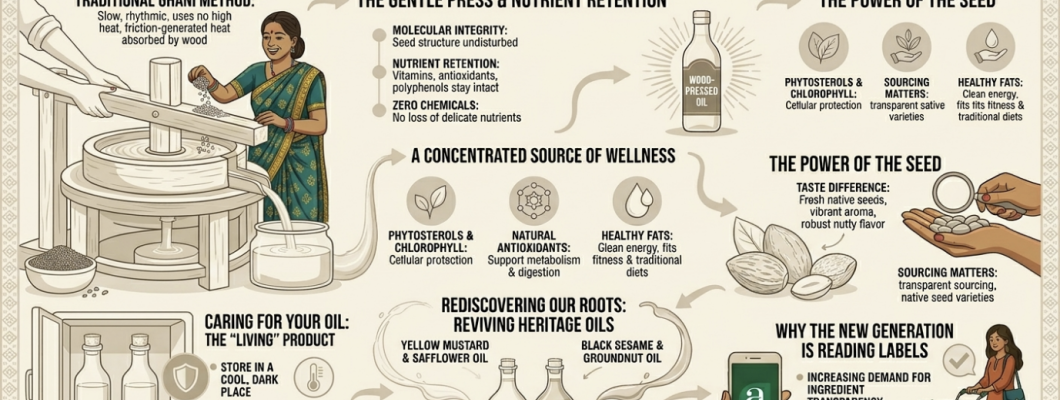
In recent years, a quiet revolution has been simmering in Indian kitchens. We are seeing a massive shift away from generic, highly processed fats toward something much older and more honest. The rise of wood-pressed oils (traditionally known as Ghani or Chekku) isn't just a trend; it’s a homecoming to mindful eating and deep ingredient awareness.
The Science of the Gentle Press
Most modern oils are extracted using high heat and chemical solvents, which can strip away the very nutrients we need. Wood-pressing, however, is a deliberately slow and rhythmic process.
- Molecular Integrity: By using a wooden Ghani or Chekku, the process avoids heat buildup, ensuring the molecular structure of the seed remains undisturbed.
- Nutrient Retention: Vitamins, antioxidants, and plant compounds like polyphenols stay intact because the wood absorbs any friction-generated heat.
- Zero Chemicals: This method prevents the loss of delicate nutrients that usually degrade during high-temperature industrial extraction.
A Concentrated Source of Wellness
Why are health-conscious households making the switch? It’s all about the nutritional density. Wood-pressed oils are naturally rich in:
- Phytosterols & Chlorophyll: Essential for cellular protection.
- Natural Antioxidants: Known to support metabolism and balanced digestion.
- Healthy Fats: Unlike refined oils, these provide clean energy that fits perfectly into a fitness-focused lifestyle, complementing high-protein meals and traditional millet-based diets.
The Power of the Seed: Quality Over Quantity
A wood-pressed oil is only as good as the seed it comes from. Because there is no heavy processing to mask the flavour, the quality of the raw material is everything.
- The Taste Difference: Fresh, high-grade native seeds deliver a vibrant aroma and a robust, nutty flavour that is unique to wood-pressing.
- Sourcing Matters: Brands like adhigai lead the way by focusing on transparent sourcing and using native seed varieties, ensuring that the purity you see on the label is what you get in every bottle.
Why the New Generation is Reading Labels
Today’s younger consumers are no longer satisfied with generic ingredients. There is a growing demand for Ingredient Transparency.
- Batch Information: Shoppers now look for specific wood-pressing extraction methods and batch details.
- Clean Supply Chains: This shift is pushing the industry toward higher standards, forcing a move away from refined oils with hidden processing steps toward oils that are closer to nature.
Rediscovering Our Roots: Reviving Heritage Oils
Wood-pressing is doing more than just providing health benefits; it’s reviving India’s forgotten culinary history. We are seeing a resurgence of regional staples that were once the backbone of Indian cooking:
- Sesame oil
- Groundnut Oil
- Coconut oil
These ingredients are finding their way back into modern kitchens, offering an authentic taste and aroma that processed oils simply cannot replicate.
Caring for Your Oil: The Living Product
Because wood-pressed oils are not chemically stabilized or packed with preservatives, they are essentially living products. To keep them at peak potency:
- Store in a cool, dark place: Keep them away from direct sunlight and moisture.
- Respect the sensitivity: This natural sensitivity is a sign of purity—proof that the oil has not been altered by harsh processing for an unnatural shelf-life.
The Bottom Line
Choosing wood-pressed oil is a vote for honesty in food. It’s a simple, straightforward choice that supports both long-term health and the preservation of authentic Indian flavours. In an age of over-processing, going back to the traditional Ghani method is the most forward-thinking move you can make for your family’s wellness.
Is your kitchen still using refined oils?
It might be time to experience the unmatched aroma and vitality of a truly traditional wood-press.
Leave a Comment